
Leadership Circle Profile for Australian Technology Leaders
I Didn't See It Until Someone Showed Me
I first encountered the Leadership Circle Profile when my own coach used it with me. What it revealed wasn't entirely surprising to others — but it was confronting. Once I got past that, it helped me understand why I wasn't getting traction and what to do about it.
Like many tech leaders, I bring real knowledge, skills and experience to my role. The problem wasn't capability. It was what happened under pressure. When the change I was pushing for wasn't landing, I'd fall back on a set of reactive behaviours that made things harder, not easier.
The gap between how I saw myself and how I came across to peers, direct reports and stakeholders was real. Where I saw myself as knowledgeable and direct, they experienced me as arrogant. That was the opposite of how I wanted to lead — and not at all how I saw myself.
The LCP helped me see it clearly for the first time. That's why I use it with clients.
Self-Awareness is the Starting Line for Effective Coaching
Professor Adam Grant says, "The biggest driver for career success is having the self-awareness of where you need to get better and being able to do something about it."
In my experience coaching CIOs and CTOs, this is exactly right — and it's exactly where most senior tech leaders are stuck. Not because they lack intelligence or drive, but because the higher you go, the less honest feedback you receive. People stop telling you what they actually think.
The LCP fills that gap. It asks the people around you — your CEO, your peers, your direct reports, your stakeholders — how they actually experience your leadership. Then it compares that with how you see yourself.
Two questions anchor the whole process:
Where are you now? Where do you think you are as a leader — and where do others see you? Are these aligned?
Where are you going? Where do you want to go — and where does your organisation need you to go?
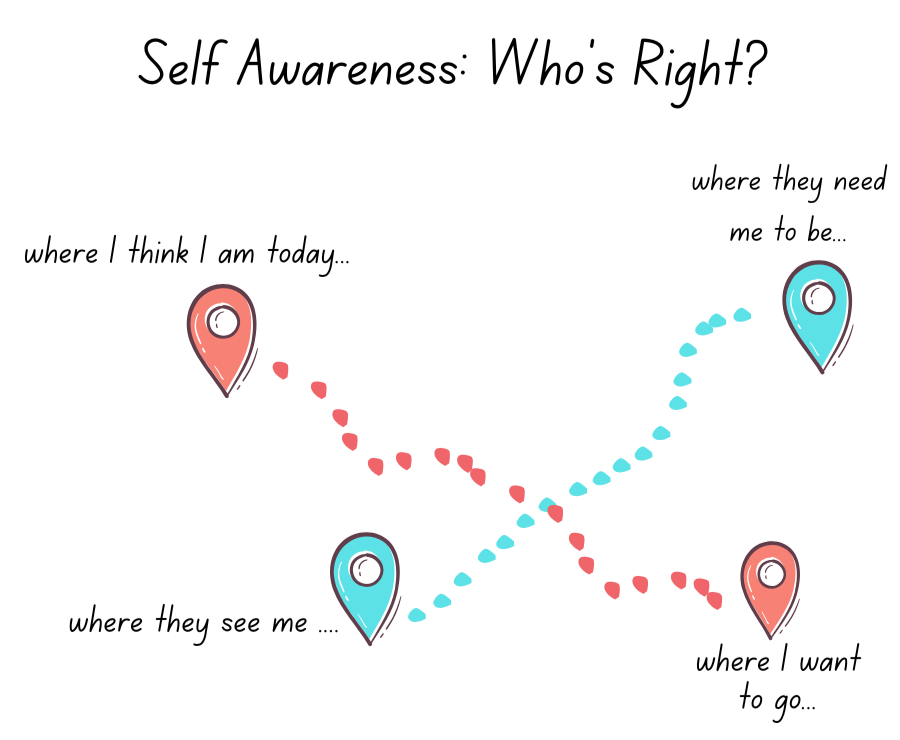
Most leaders start with a meaningful gap between self-perception and how others experience them — whether that shows up as overconfidence or imposter syndrome. The size of that gap is a direct measure of self-awareness. And closing it is where real leadership growth begins.
What the LCP Actually Measures
The LCP isn't a personality test or a 360 survey. It's a comprehensive leadership diagnostic built on decades of research across psychology, adult development theory, and leadership effectiveness.
It measures 29 dimensions of leadership, grouped into two categories:
18 Creative Competencies — the behaviours consistently linked to leadership effectiveness. Think of these as the qualities you'd use to describe a leader who gets results by bringing out the best in others: visionary, courageous, systems-aware, genuinely caring about the people they lead. These leaders work hard, but they're energised by it. They're the ones people want to work for again.
11 Reactive Tendencies — the patterns leaders slip into under pressure. These aren't character flaws; they're protective habits, often deeply ingrained, that may have served us well in the past but now limit our effectiveness.
When I had my first LCP, I was working at a non-profit education organisation. The absolute love and care I felt for our organisation's purpose wasn't translating into positive change — because under pressure, it showed up to others as arrogance. Not intentional. But real, and measurable. And incredibly normal.
The LCP scores you on each of these 29 dimensions using multi-rater feedback — aggregating responses from your board, CEO, peers, direct reports and stakeholders — and benchmarks your results against a global database of over 500,000 leaders. You get a percentile score on every dimension, so you know exactly where you stand, not just in your organisation, but globally.
This is what I mean when I call it a Leadership MRI. It sees through you from multiple angles at once. And like an MRI, what it finds isn't always comfortable — but it gives you something precise to work with.
What Happens After the Assessment
The data is only useful if you know what to do with it. That's where coaching comes in.
I've now used the LCP with every coaching client. The reaction is almost always the same as mine was — recognition, some discomfort, and then a kind of relief. Finally, a clear picture. Finally, something concrete to work from rather than vague impressions and secondhand feedback.
We use the results to build a coaching focus that's specific to you — not a generic development plan, but a targeted response to what your data actually shows. Which reactive patterns are costing you the most? Which creative competencies would, if strengthened, have the biggest impact on your team and your results?
Because we have a baseline, we can also measure progress over time. Leadership development stops being abstract and starts being as concrete as any other performance metric you'd apply in your role.

What Clients are Saying: “Working with Andy has been a game-changer.”
“His coaching unlocked rapid growth for me—as a leader, and as a human—and has positively influenced our company’s evolution. Andy's "Leadership MRI" was one of the toughest and most valuable experiences of my career. With Andy’s calm, seasoned support, I turned confronting feedback into clear, measurable progress in just a few months.
For any founder navigating the challenges of scaling, I can’t recommend Andy highly enough. He brings deep experience, rare clarity, credibility, and real impact.
Sam Clarke - Cofounder @ Clipboard
A Note on How I Work
I limit my practice to six clients at a time. That's a deliberate choice — it's the only way I can give each engagement the depth and focus it deserves.
If you're a CIO or CTO who suspects there's a gap between how you see your leadership and how others experience it, I'd like to talk. Not to sell you something — but to find out whether working together makes sense.

Let’s discuss your leadership objectives. If it’s a good fit, perhaps we can work together. If not, then that’s ok too.
View and download my coaching bio
